

When people obsess over an ex, it can be confusing, exhausting, and almost impossible to stop these feelings. Even when you know that the relationship has come to an end, some part of you feels stuck.
Sometimes when this happens, you might replay conversations over and over, reread old texts, obsessively check their social media, think of them with someone else, wonder if they miss you, feel tempted to text them, or even relive memories.
The hardest part when this happens is realizing that doing this is hurting you, and still, you don’t feel that you can completely let go. Some people get upset with themselves because they feel that they should be over this by now, but emotional obsession and heartbreak aren’t about a lack of discipline or even being weak but it’s the brain and nervous system reacting the way they were wired to react after some kind of loss.
Understanding this can change everything.
Obsessing Over an Ex Can Feel Addictive
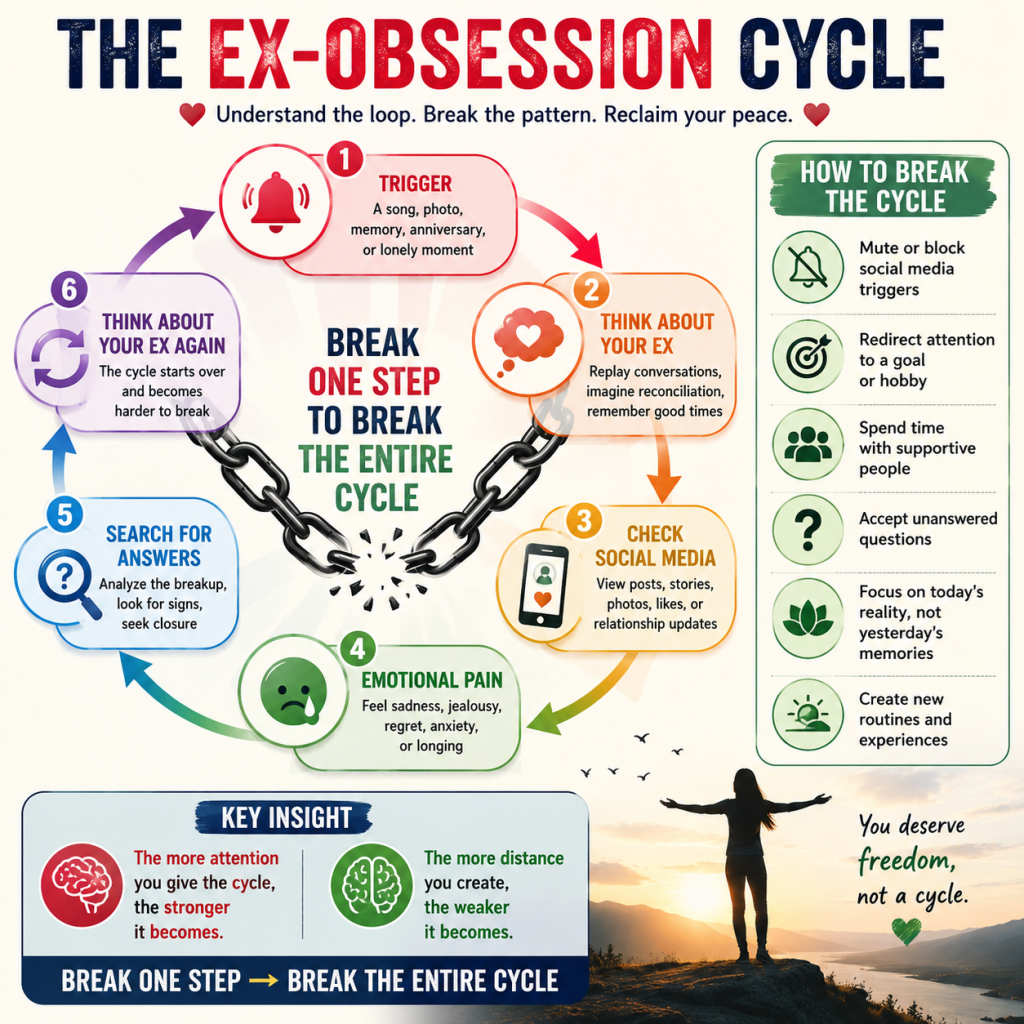
One big reason that breakups feel emotionally consuming is that a romantic attachment affects how the brain works. According to Psychology Today on Love and Brain Chemistry, neuroscience shows that romantic love activates the dopamine reward pathway that is similar to that of those who have cravings and are addicted.
When you fall in love with someone, the brain gets attached to things like closeness, routine, physical affection, connection, anticipation, validation, and certainty, and this shows that your ex wasn’t someone who was just significant emotionally but also significant neurologically as well.
When the relationship comes to an end, your brain reacts the same way it does when you go through a withdrawal. This is why breakups can trigger things like:
- Obsessive thinking.
- Anxiety.
- Emotional cravings.
- Intrusive memories.
- Compulsive checking behaviors.
The brain is looking for some kind of emotional relief when a breakup happens.
Social Media Can Make Things Worse
One damaging breakup habit is to keep checking your ex’s social media. Sometimes people tell themselves that they are just being curious, but according to psychology, something deeper is happening.
Each time you check your ex’s social media, dopamine will spike temporarily, which causes you to have increased anxiety, and the brain starts anticipating an emotional reward. The body will then start comparing things, and your self-worth starts to drop. This is a cycle that will repeat over and over again each time you do it.
According to Psychology Today on Intermittent Reinforcement, research shows that behavioral reinforcement that happens on a consistent basis shows that intermittent emotional rewards make compulsive behavior patterns stronger.
This is one reason that when you keep checking on your ex’s profile, it can cause you to have addictive behavior.
Getting Stuck in an Emotional Loop
There are some people who get stuck in a painful emotional cycle that looks like this:
- You get curious and check their profile.
- Emotional anticipation rises, and you see something that is confusing or painful.
- This causes a rise in anxiety, and then it causes you to emotionally spiral.
- You try to self-regulate your emotions, but then you get curious again and do it all over.
When this happens, it causes the nervous system to be conditioned to repeat this loop automatically, and this is why obsession can continue even when you want to stop obsessing.
Letting Go Can Be Scary
One truth that people don’t like to talk about is that obsessing over an ex might not really be about your ex anymore, but it might be more about grief, loneliness, identity change, uncertainty, vulnerability, the unknown of the future, or more.
Staying obsessed can feel safer than accepting that you went through a loss. This happens because once you really let go, you have to admit that the relationship is really over, and for some people, the uncertainty can feel scarier than the emotional pain itself.
High Achievers Often Obsess More
Some people who are highly successful struggle harder after a heartbreak because they’re used to solving problems through control and effort.
Replaying the Relationship Over and Over
One big reason that obsession can continue is that your brain is trying to complete the story.
- “What went wrong?”
- “Did they ever really love me?”
- “Could I have changed things?”
- “Was it my fault?”
- “Why did they move on so easily?”
When Your Ex Moves On
One of the hardest things to go through is seeing your ex happy, fine, dating someone else, unaffected by the breakup, and thriving.
10 Practical Ways to Stop Thinking About Your Ex All the Time
1. Catch the Spiral Early
- What triggers it?
- What time of day does it usually happen?
- How are you feeling before it starts?
2. Stop Checking Their Social Media
- Mute them.
- Unfollow them.
- Block them.
- Delete old conversations.
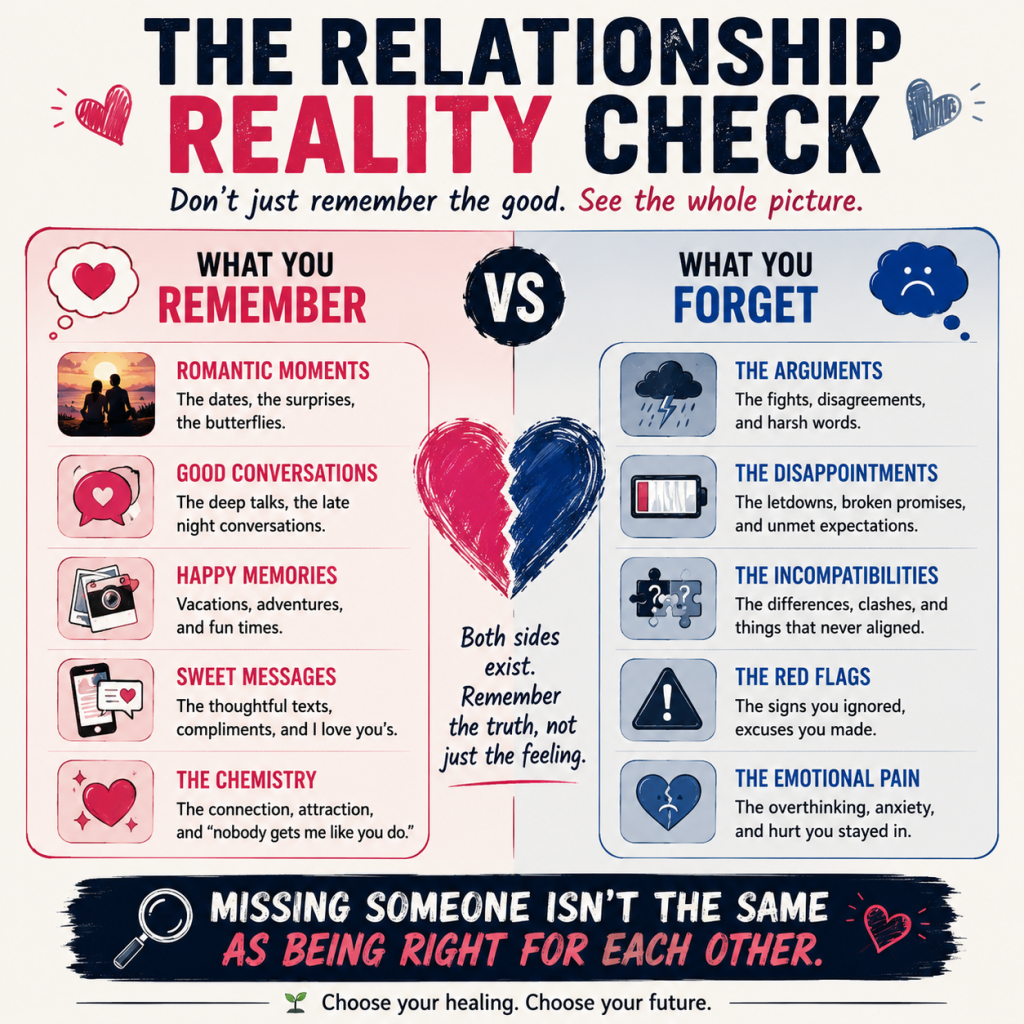
3. Remember the Whole Relationship
- The chemistry.
- The inside jokes.
- The good memories.
- The connection they felt.
- The arguments.
- The disappointment.
- The unmet needs.
- The inconsistency.
- The emotional pain.
4. Get Moving
- Going for a walk.
- Working out.
- Dancing.
- Stretching.
- Deep breathing.
- Getting outside.
5. Stop Waiting for Them to Give You Closure
- Answers.
- Explanations.
- Accountability.
- Validation.
- An apology.
6. Write Out the Full Story
- What did the relationship teach you?
- What worked?
- What didn’t work?
- What did you ignore?
- What did you need emotionally?
- What patterns kept repeating?
7. Don’t Confuse Obsession With Love
- Anxiety.
- Unfinished emotions.
- Attachment wounds.
- Fear of being alone.
- Emotional withdrawal.
- Stability.
- Trust.
- Peace.
- Reciprocity.
- Emotional safety.
8. Build a Life That Doesn’t Revolve Around the Relationship
- Friendships.
- Hobbies.
- Fitness goals.
- Creativity.
- Travel.
- Learning something new.
- Personal growth.
9. Look at the Bigger Pattern
- “I’m not good enough.”
- “People always leave.”
- “I’ll never find this again.”
- “I have to earn love.”
- “I’m easily replaced.”
10. Redefine What Progress Looks Like
- Thinking about them less often.
- Recovering faster after triggers.
- Feeling calmer emotionally.
- Checking less frequently.
- Spending less time overanalyzing.
- Putting more energy back into your own life.
What Healing Looks Like
Healing can happen slowly, where at first they are always on your mind, but then the intensity can slowly decrease. Later, you start having longer times where you have peace, and eventually you stop obsessing completely.
Signs You’re Moving On
You are healing when you feel less emotionally reactive, you stop thinking of them constantly, you stop being so curious, and your emotional regulation improves.
Final Thoughts: Obsessing Over Your Ex Doesn’t Mean You’re Weak
Obsessing over your ex doesn’t mean you’re weak, broken, or not able to move on, but it means that your brain, nervous system, attachment patterns, and emotional wounds are still trying to process the uncertainty and the loss.
Healing becomes possible when you stop feeding into the cycle, and then you start understanding what is going on. The goal isn’t to pretend that you didn’t care; you did, but the goal is to learn how to regulate your emotional cravings while reconnecting with yourself.
Real healing doesn’t happen when you get the perfect answer or an explanation from your ex, but it happens when your nervous system realizes that you’re emotionally safe, whole, and worthy even without being in the relationship.
Frequently Asked Questions
1. Why do I keep obsessing over my ex?
You may keep obsessing over your ex because your mind is still attached to the emotional routine, memories, and unanswered questions from the relationship. This does not always mean the relationship was right for you. It often means your brain is still trying to make sense of the loss.
2. Is it normal to think about my ex every day?
Yes, it can be normal after a breakup, especially if the relationship was intense, recent, or ended without closure. However, if these thoughts stop you from sleeping, working, socializing, or enjoying life, it may be time to create stronger emotional boundaries.
3. How do I stop checking my ex’s social media?
The best way is to remove easy access. Mute, unfollow, block, or take a break from social media if needed. Every time you check their profile, you restart the emotional cycle and make it harder to move forward.
4. Why does checking my ex’s profile make me feel worse?
Checking your ex’s profile gives your mind new information to overthink. A photo, like, comment, or story can trigger jealousy, hope, sadness, or confusion, even when it does not actually explain anything meaningful.
5. Does missing my ex mean I should contact them?
Not always. Missing someone can come from loneliness, habit, attraction, or unfinished emotions. Before contacting your ex, ask yourself whether reaching out would bring real peace or simply restart the same painful pattern.
6. What is the ex-obsession cycle?
The ex-obsession cycle is the repeated loop of being triggered, thinking about your ex, checking for updates, feeling emotional pain, searching for answers, and then thinking about them again. Breaking one part of the cycle can help weaken the whole pattern.
7. How long does it take to stop obsessing over an ex?
There is no exact timeline. Some people feel better in a few weeks, while others need months. Healing usually becomes easier when you stop feeding the obsession with social media checks, old messages, and constant analysis.
8. Should I delete old photos and messages?
If old photos and messages keep pulling you back into pain, it may help to delete them, archive them, or move them somewhere you do not easily access. The goal is not to erase the past, but to stop reopening the wound every day.
9. Why do I only remember the good parts of the relationship?
After a breakup, the mind often romanticizes the past. You may remember the affection, chemistry, and happy moments while forgetting the arguments, disappointment, anxiety, or incompatibilities that also existed.
10. How do I stop romanticizing my ex?
Write down the full reality of the relationship, not only the good memories. Include the problems, unmet needs, red flags, and reasons the relationship ended. This helps your mind see the whole picture instead of only the parts you miss.
11. Is no contact helpful after a breakup?
Distance can be helpful because it gives your emotions time to calm down. When you are not constantly talking, checking, or reacting to your ex, your mind has more room to rebuild independence and clarity.
12. What should I do when I get the urge to text my ex?
Pause before acting. Write the message in your notes app instead of sending it, wait at least 24 hours, and ask yourself what you are hoping the message will change. Often, the urge passes when the emotion settles.
13. Why do I feel addicted to my ex?
Romantic attachment can feel addictive because your brain connects the person with comfort, excitement, validation, and routine. After a breakup, the sudden loss of that connection can feel like emotional withdrawal.
14. Can staying friends with my ex make obsession worse?
Yes, it can make obsession worse if you still want them back or feel hurt by their choices. Friendship may only be healthy when both people have emotional distance, clear boundaries, and no hidden expectations.
15. How do I stop comparing new people to my ex?
Remind yourself that new people are not supposed to recreate the same relationship. Try to notice how someone makes you feel now, instead of measuring them against memories from the past.
16. What if my ex moved on faster than me?
Your ex moving on faster does not mean they cared less or that you are behind. People process breakups differently. Focus on your own healing instead of using their timeline as proof of your worth.
17. How can I get closure without talking to my ex?
You can create closure by accepting what the relationship showed you, what it cost you, and what you need next. Closure is not always a final conversation. Sometimes it is a decision to stop waiting for answers that may never come.
18. What helps when I keep replaying memories?
When memories repeat, gently redirect your attention to the present. Get up, move your body, call someone, journal, clean your space, or focus on one small task. Action helps interrupt the mental loop.
19. When should I seek extra support after a breakup?
Consider extra support if the breakup is affecting your sleep, appetite, school, work, friendships, or daily life for a long time. Talking with a trusted person or professional can help you process the emotions more safely.
20. What is the best first step to stop obsessing over my ex?
The best first step is to remove the strongest trigger. For many people, that means muting social media, stopping message rereads, or creating distance from reminders. Small changes can weaken the cycle over time.